Health and drugstore. Shopify for large ranges across many channels.







What sets health and drugstore projects on Shopify apart
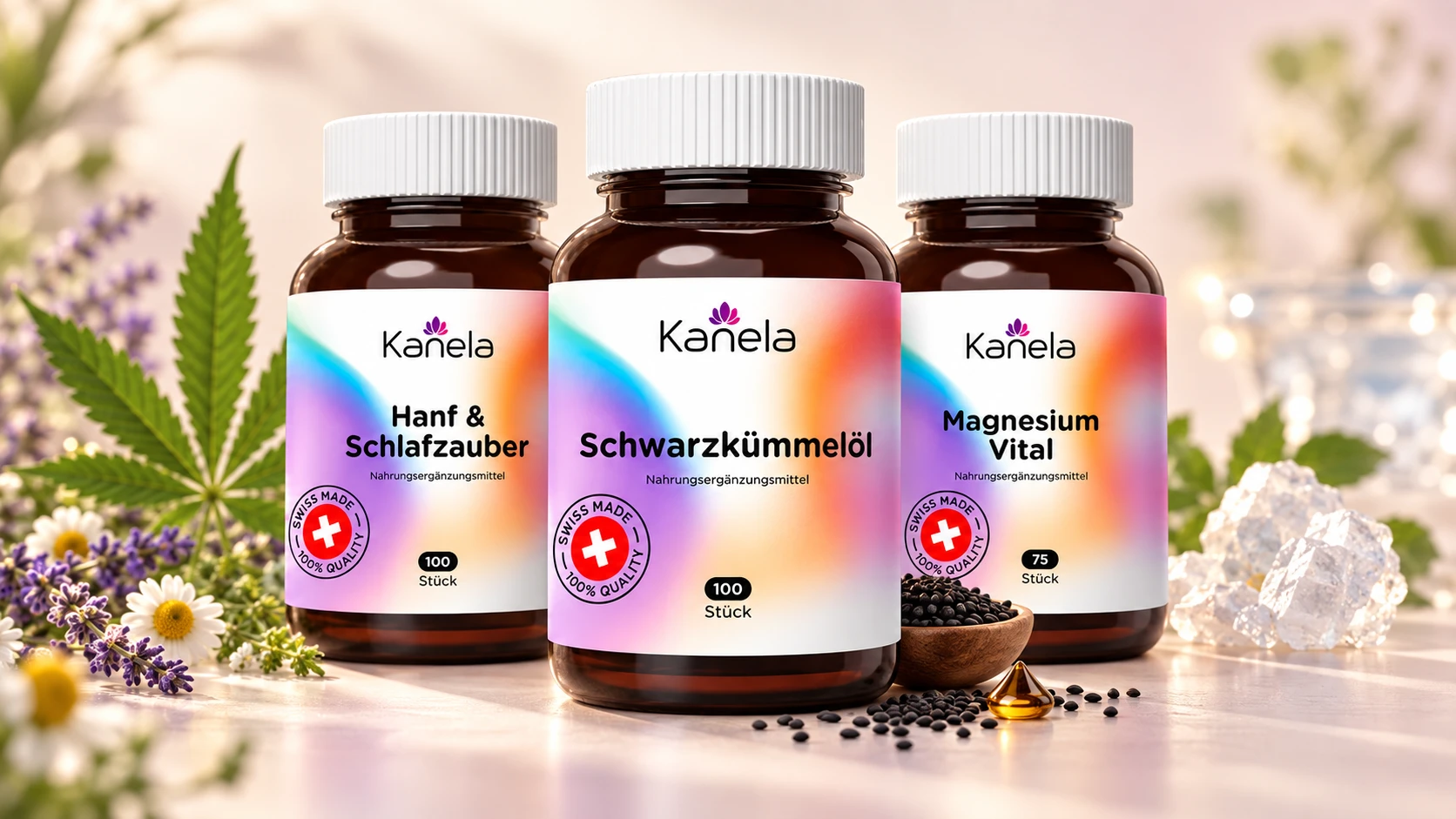
Drugstore and healthcare stores carry large ranges whose products have to stay unambiguous across several identifiers, suppliers and channels. On top of that come marketplaces, stock from your own warehouse and wholesalers, and advertising claims that are tightly regulated. We build Shopify setups that make these data flows controllable, proven with the migration of Swiss online drugstore Kanela from PrestaShop to Shopify Plus with more than 40,000 products and three connected marketplaces.
What sets an online drugstore on Shopify apart from a brand store?
A brand store sells a few hundred of its own products. An online drugstore carries tens of thousands of products from many manufacturers, often with similar names, different pack sizes and variants. Every product needs an unambiguous identity, otherwise reviews, stock or marketplace offers end up on the wrong product. The problem is rarely the platform, but the quality and matching of the data.
On top of that, product data comes from many sources: manufacturers, wholesalers, the ERP and legacy store systems. Each source has its own fields and spellings. If you merge them without checks, you get duplicate products, empty categories and filters that find nothing. With a range of this size, that does not show on a single product, only in the sum.
That is why we start with the data model: which identifier leads, which system supplies which data and what happens when information is missing. At Kanela, 337,891 product-category relationships were analysed and 13,540 category tags added. Only on that basis were navigation, filters, search and bestseller logic designed around the large range.
How do product identifiers stay unambiguous across store, ERP and marketplaces?
In a drugstore a product rarely has just one number. There is the SKU in the store, the manufacturer's EAN or GTIN, in Switzerland often a Pharmacode, plus legacy product IDs and separate identifiers for each marketplace. As long as these numbers are not cleanly linked, errors appear at every interface, and nobody can see at once where they come from.
At Kanela that was exactly the core of the starting point. Product identities across SKU, EAN/GTIN, Pharmacode, legacy product ID and marketplace ID were unified. For Manor, existing offers were matched to Shopify variants by GTIN, 3,159 offers in total. For Galaxus, the case study lists 32,203 consistent identifiers that are validated separately before being supplied.
Which identifiers a drugstore product typically carries
- The SKU as the internal product number in the store
- The manufacturer's EAN or GTIN
- The Pharmacode for products from the Swiss healthcare market
- Legacy product IDs from the previous store system
- Offer or product IDs of the individual marketplaces
How do you connect Shopify to marketplaces such as Galaxus or Zur Rose?
Marketplaces bring reach, but each has its own formats, rhythms and rules for product data, prices, stock, orders and cancellations. If you send everything through a single feed, you often only see errors once customers have already ordered. That is why we separate every data flow and check it before it reaches a marketplace.
At Kanela three marketplaces run with separate workflows. Zur Rose receives daily product data plus price and stock updates every 15 minutes, with 27,302 products validated there. Galaxus gets five separate feeds and a protected openTRANS workflow. At Manor, existing Mirakl identities remain intact while offers, prices and stock move to the new workflow in stages.
The opposite direction matters just as much. Marketplace orders have to arrive in the system exactly once, and shipping and cancellations have to be reported back. An explicit channel source, duplicate protection, a global job lock and a permanent shipping journal prevent duplicate processing. That keeps every transaction traceable months later, when customers or marketplaces ask.
How do you combine stock from your own warehouse and wholesalers?
Many drugstore and healthcare stores do not only sell what sits in their own warehouse. Part of the range can be delivered at short notice from wholesalers. The store therefore has to decide from several sources whether a product can be sold. If a message is missing or arrives late, sales stop for no reason or you sell what is not there.
At Kanela a dedicated application combines own stock with availability at Galexis and Avosana. Missing or stale data therefore cannot trigger false sales stops. The application automatically stops unusual bulk changes, backed by dry runs and safety thresholds. In the project, 1,820 Shopify inventory values were also corrected before the new logic took over.
How do you keep SEO intact with tens of thousands of URLs and several languages?
Over the years a large range collects many addresses: products, categories, manufacturers and guides, plus a separate version for each language. When you change platform, almost all of them change. Without complete redirects, search engines lose the mapping, and links from comparison sites, guides or old newsletters lead nowhere.
At Kanela, 147,753 legacy URL mappings from four language versions were created and then read back. Reading them back is the decisive step, because it checks whether every redirect has actually arrived in the store. In parallel, products, categories, customers, bonus balances, orders and reviews were systematically reconciled and transferred.
In Switzerland, several languages are not an extra feature but everyday business. German, French and Italian are national languages, and customers expect product pages in their language. With Shopify Markets and translated content, language versions run in one store. What matters is that every language keeps its own stable URLs and that redirects are planned per language.
Which rules apply to advertising claims and mandatory information?
Health-related claims are tightly regulated. For food and food supplements, the EU Health Claims Regulation applies and only permits authorised claims. For medicines and medical devices, the German Heilmittelwerbegesetz, among other laws, governs what may be advertised, and Switzerland has rules of its own. The legal review belongs in the hands of your specialists.
The store has to reflect the result technically. Mandatory information belongs in structured fields, not in free text. For food supplements that means ingredients, recommended daily intake and warnings, for cosmetics the ingredients under the Cosmetics Regulation (EC) 1223/2009. Maintained as metafields, they appear in the same place on every product page and can be passed on to marketplaces.
That also helps with maintenance. When a piece of information changes, it is corrected in one place instead of in thousands of descriptions. Claims in banners, category texts and campaigns should go through the same approval as product texts before publication, so that no claim reaches the store or a marketplace without being checked.
What we work on in health and drugstore projects
Data model for large ranges
Unambiguous product identities across SKU, EAN/GTIN, Pharmacode and marketplace IDs, plus categories, filters and search for tens of thousands of products. At Kanela for more than 40,000 products.
Marketplace integration
Separate flows for product data, prices, stock, orders, shipping and cancellations. At Kanela for Zur Rose, Galaxus and Manor, with duplicate protection and permanent logs.
Stock from several sources
Own warehouse and wholesalers evaluated together, with dry runs and safety thresholds against unusual bulk changes. At Kanela with Galexis and Avosana.
Migration with SEO protection
Products, customers, orders, reviews and legacy URLs transferred with full traceability, redirects per language version created and read back, while live integrations keep running until each replacement is verified.
Mandatory information as data
Ingredients, recommended intake and warnings as metafields, so they appear consistently on every product page, are maintained per language and can be passed on to marketplaces.
Proof from drugstore and healthcare
One project that shows what matters in this industry: a large range, several marketplaces, stock from several sources and a migration in which daily operations had to stay protected. The figures come from the linked case study.

Frequently asked questions from health and drugstore projects
Can Shopify handle a range of tens of thousands of products?
Can we supply marketplaces directly from Shopify?
How do we prevent wrong stock levels for wholesale goods?
What happens to our Google rankings during the migration?
Do you check our advertising claims legally?
How do we cover German, French and Italian in one store?
Related services
Range, marketplaces, stock: talk to us about where you stand
Tell us how large your range is, which systems and marketplaces are connected and where your stock comes from. We will tell you where the risks lie and what we would start with.
This page is based on one delivered project, the migration of Kanela to Shopify Plus. Every figure above appears exactly like this in the linked case study.