Fewer workarounds
A purpose-built app replaces spreadsheets, manual handoffs and several half-fitting tools.
Three purchased apps often cost more than one of your own - and still only half-solve the problem. We build the app that fits your process.
Start a Project
A purpose-built app replaces spreadsheets, manual handoffs and several half-fitting tools.
Data, permissions and roadmap stay aligned with your actual use case.
Admin, storefront, checkout and external systems work together through stable Shopify interfaces.
Apps installed in your store only: admin interfaces for your team, automations, data processing and connections to third-party systems. No App Store review, no external roadmap, full control over data and permissions.
Extensions that hook into the places Shopify provides: admin blocks, theme app extensions in the storefront and - on Shopify Plus - checkout extensibility instead of edits to checkout.liquid.
If your solution is meant to become a product: multi-tenancy, Billing API, privacy webhooks, App Store listing and Shopify's review process - including the question of whether it pays off.
A new section, a badge, a filter over data you already have. Building an app for that creates operational overhead with no return.
As long as all data already sits in the store and no credentials need protecting, you need neither a server of your own nor an app.
Displays, calculations and configurators that nobody can manipulate to their own advantage are fine in the front end.
Only worthwhile if many merchants share the problem and you are ready to carry support, billing and continued development permanently.
As soon as your team has to maintain, approve or review something, it needs a surface inside the Shopify admin - embedded via App Bridge.
API keys, ERP credentials or pricing logic nobody may see belong on a server, not in theme code.
Discount, shipping and payment logic runs through Shopify Functions and checkout UI extensions. Both require an app.
Scheduled jobs, webhook processing and bulk operations need a running process. Theme code only executes on page requests.
We clarify which process actually breaks, who uses the app and what happens when it fails. Scope frequently shrinks considerably at this step.
We check honestly whether an existing app is enough. An off-the-shelf app that covers 80 percent often beats a custom one - as long as the missing 20 percent is not the core of your business.
Access scopes are limited to what is needed; webhooks and data storage are documented. Widening scopes later requires renewed approval and is correspondingly unpleasant.
Admin API over GraphQL, interface via App Bridge, extensions as app extensions. Development runs against a development store with realistic data.
Rate limits, failure cases and retries are tested actively, not just the happy path. Rollout is controlled; for public apps it runs through Shopify's review process.
Shopify releases new API versions regularly and retires old ones. We keep the app on a supported version, monitor errors and schedule changes before anything expires.
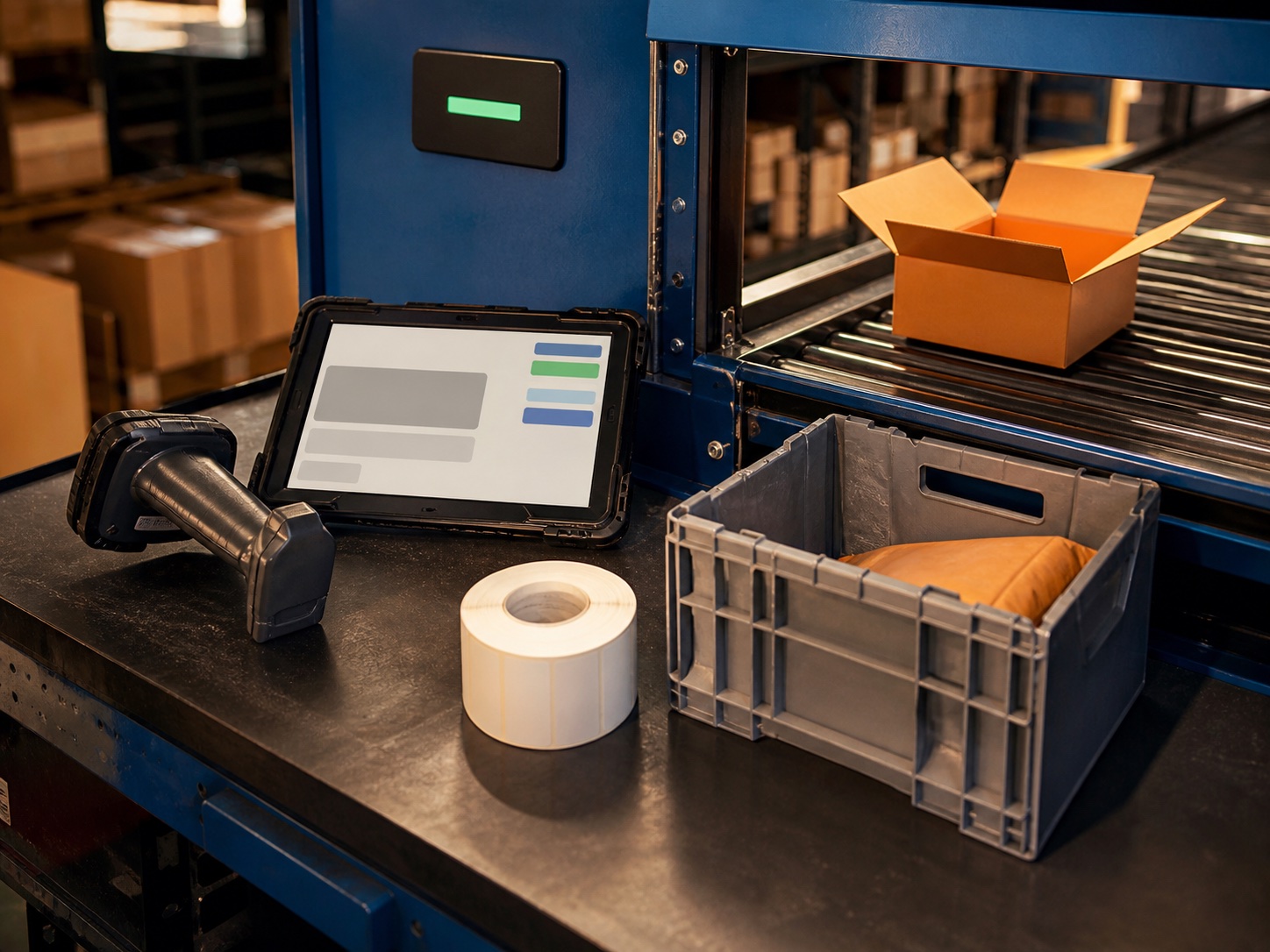
Several subscriptions add up monthly and often scale with revenue or order volume. A custom app costs more once and maintenance afterwards. Whether the switch pays off shows in your own store's actual app spend and in how it grows with volume.
Every installed app brings scripts, assets and data fields with it. Three apps for one job load the storefront three times over; one bundled solution only once.
When three apps interpret the same data differently, your team pays for it in daily coordination. One app built around your process model removes that.
Price changes, acquisitions or discontinued apps hit you without warning. With a custom app the code is yours - along with the duty to maintain it.
The workflow the app is meant to take over already exists - today in spreadsheets, by word of mouth or by hand in the admin.
You have worked with an off-the-shelf app and can name exactly where it fails to represent your process.
It is clear who watches for failures after launch, owns the hosting and keeps up with new Shopify API versions.
Product records, metafields and inventory are maintained. An app automates a process; it does not repair data quality.
If it is still being debated internally whether to build at all, that decision will cost more than any prototype.
Shopify strategy & consultingIf the point is purely moving products, inventory or orders between store and ERP, the flow is the subject, not an interface.
System integrationMany shipping, payment and discount adjustments can be solved with existing configuration before custom logic becomes necessary.
Shopify checkoutNot every project starts with development - sometimes the solid answer is that no custom app is needed at all.

For projects where it is unclear whether a theme extension, an existing app or custom development is the right route.
Ends with a reasoned recommendation including scope - even when it argues against building your own app.
For a clearly described process that should exist as a working custom app inside your store.
Ends with an installed app your team can operate day to day without us.
For apps in production that have to keep pace with Shopify's regular new API versions.
Ends with an app that does not fail unannounced because an API version was deprecated.
Brands with €950M+ GMV trust us
From migration to scale, NICCOS combines sophisticated design, robust technology and data-driven growth on Shopify.





A custom app is installed in your store only, goes through no App Store review and may be tailored exactly to your process. A public app is a product for many merchants: multi-tenant, with billing, support and review. For internal requirements the custom app is almost always the right route.
Whenever the task is presentation and all data already sits in the store. Visible building blocks, layouts and filters belong in the theme. As soon as server logic, protected credentials, an admin interface or checkout rules are involved, there is no way around an app.
It is the route Shopify provides for extending the checkout after checkout.liquid was retired. Customisation runs through checkout UI extensions and Shopify Functions, meaning through an app rather than theme code. The more far-reaching options are available on Shopify Plus.
Almost entirely down to the scope of the integrations, not the interface. An app that automates a clearly described process is finished far sooner than one that has to settle a data model on the side. A reliable timeline therefore only emerges after the interfaces have been scoped.
Either your team or ours. Hosting, monitoring, error handling and dealing with new Shopify API versions all need an owner. Without one, every app ages quietly and eventually fails without notice.
For anything that holds credentials, processes webhooks or runs on a schedule, yes. Pure interface extensions can sometimes do without. The question comes down to whether logic must be protected and executed outside a page request.
Yes, but that is a separate discipline. Storefront, templates, sections and front-end performance are covered on our Shopify development page. This page covers everything that runs in the admin, in the checkout or on a server of its own.
We look at your process and tell you whether a theme extension is enough, an existing app will do, or a custom app is the cheaper answer.
Last updated:
NICCOS
The page could not be loaded.
Please reload the page. If an update has just gone live, this will load the latest version.